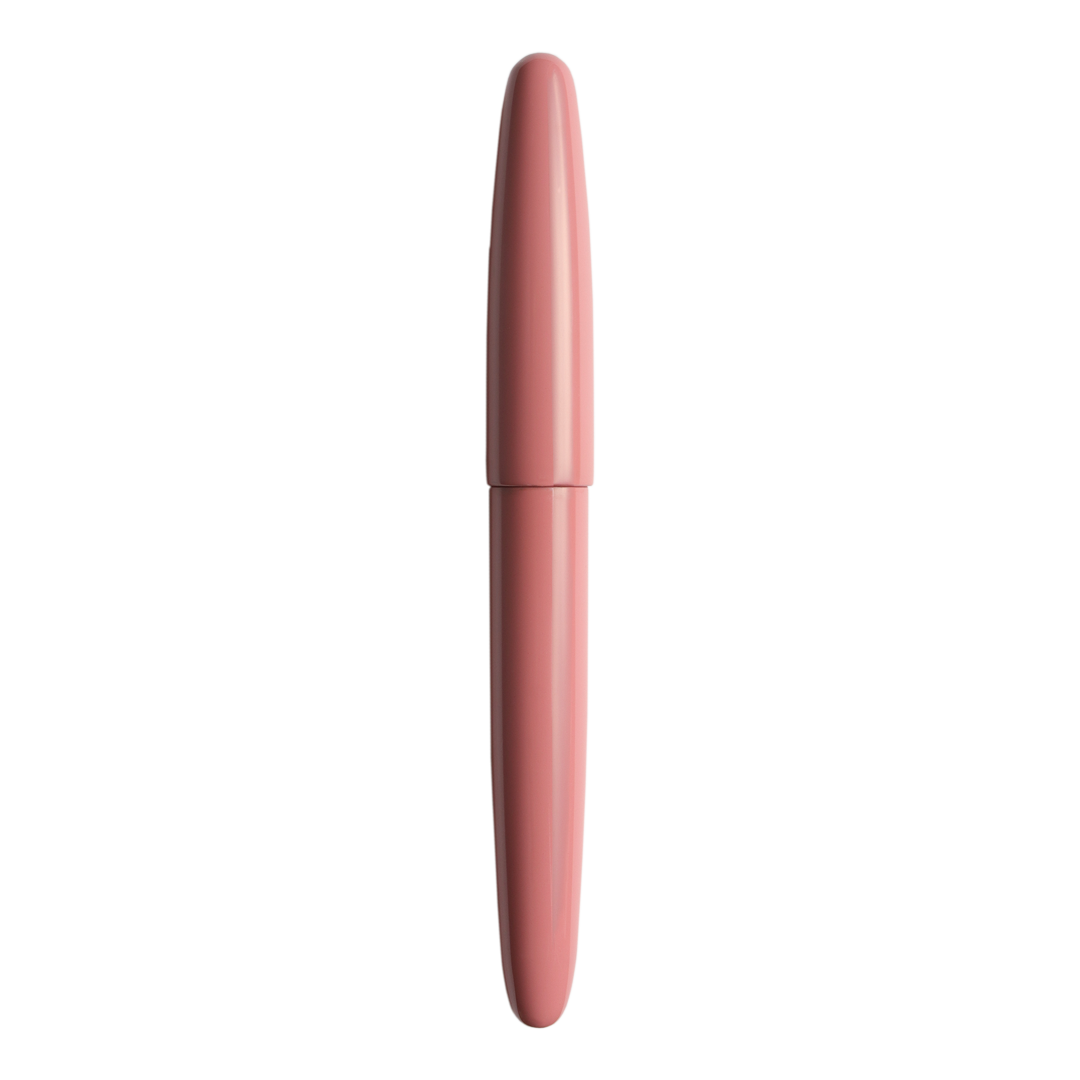
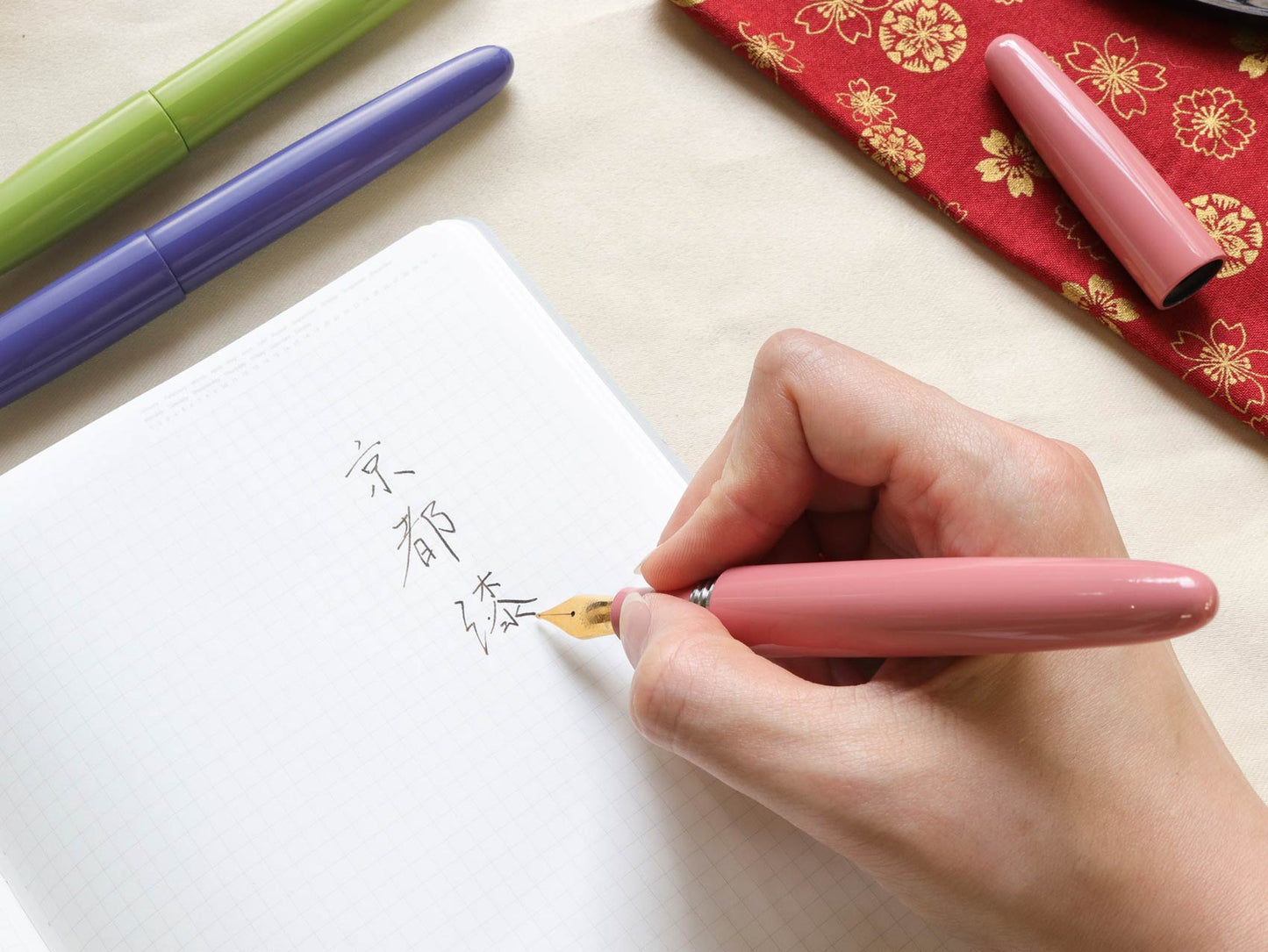
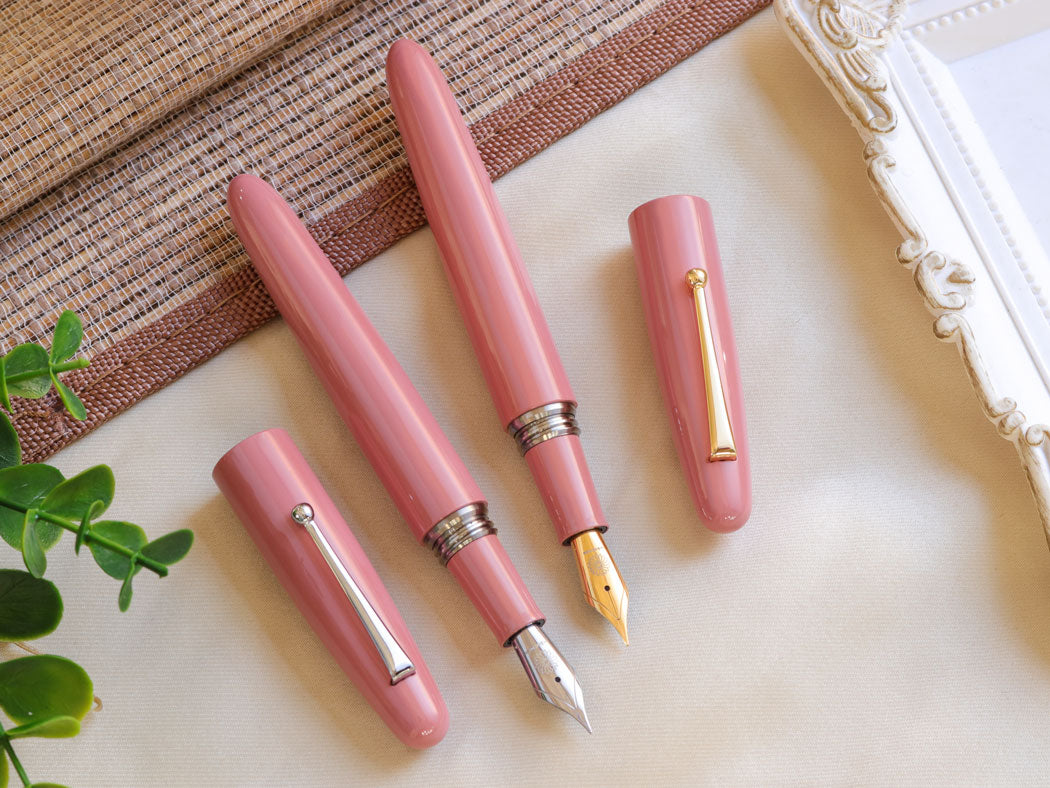
Kyoto Urushi Kasane-iro - Yukinoshita
Kyoto Urushi Kasane-iro - Yukinoshita
Couldn't load pickup availability
Description
Description
Kyoto Urushi - Kasane no Irome
During the peaceful Heian Period (794-1185 AD), Japanese culture and society flourished, allowing literature, cuisine, and even fashion to explore interesting new ideas. One of the most significant and enduring concepts from this time was the Kasane no Irome ( かさねの色目 ), which related to the layering of robes in a kimono to produce multi-colored patterns or unique gradients that cannot be achieved through the dyeing techniques of that time.
A kimono following Kasane no Irome would typically have an Uwagi (the over or outer-robe), the Hitoe (the under-robe), typically followed by five layers of varying shades or colors, although some of the more complex designs utilize up to eight different robes. Each layer of color would have a specific meaning that would correspond to both the event (for example, the summer festival), or it would relate to the wearer's status and even mood of that day. Combining these colors would then create an even greater meaning, making the kimono multi-layered in both a literal and figurative sense.
Today, the kimono is no longer commonplace, yet the meaning of these colors, and the colors themselves still retain their meaning and significance, even if we are not aware of it.
The Yukinoshita
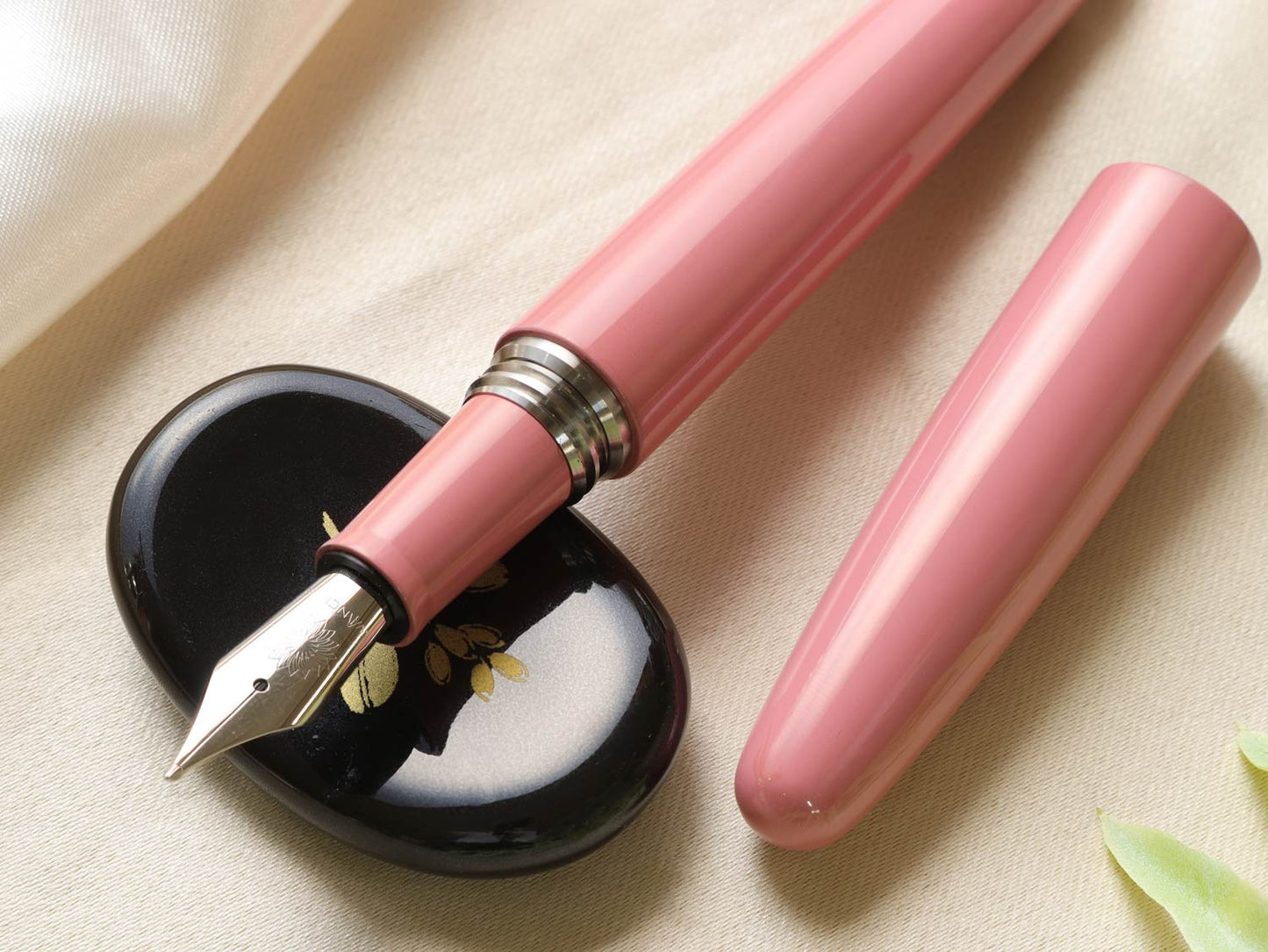
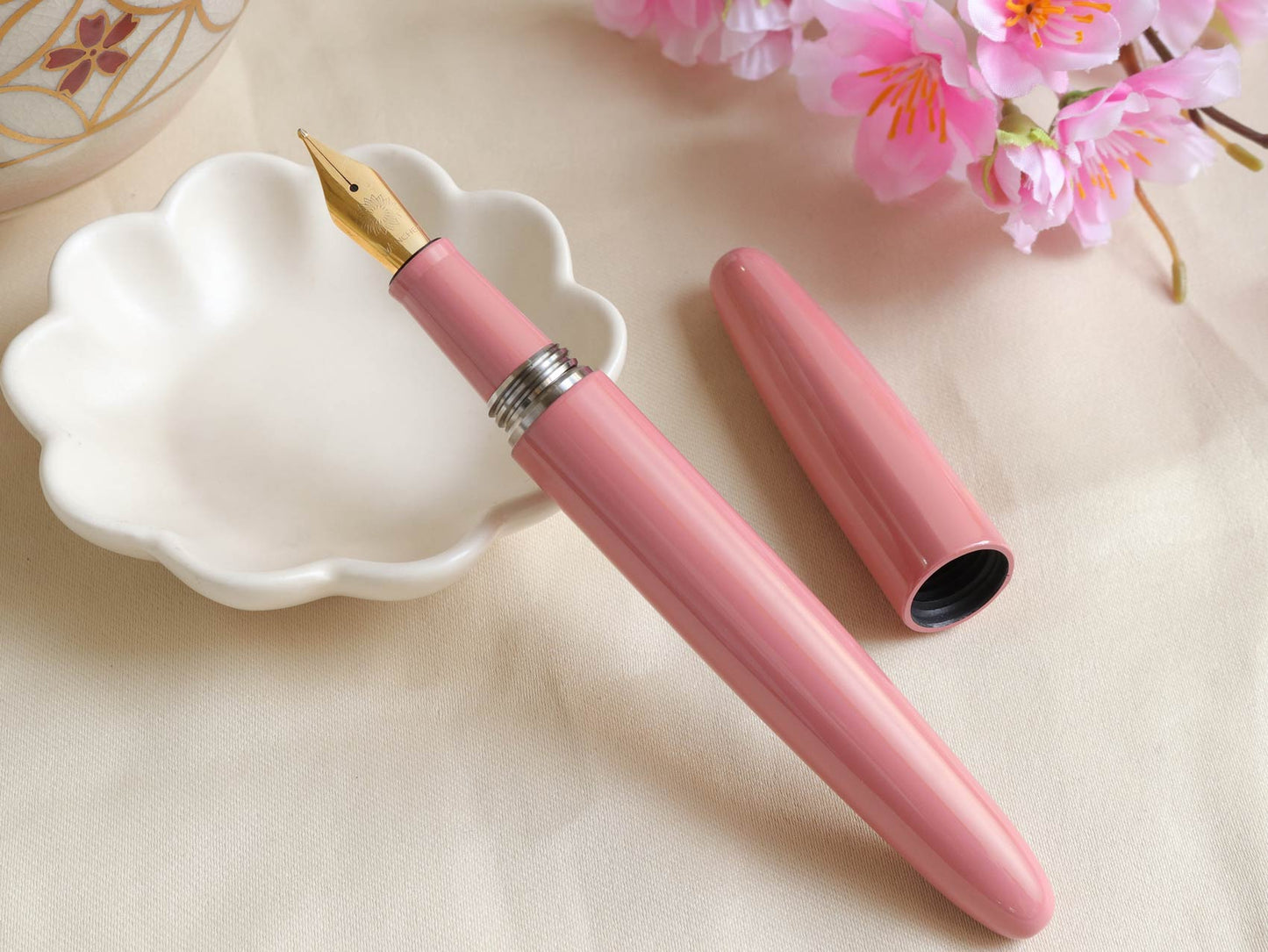
With a name that literally translates to 'Under the Snow', the light pink color is meant to represent the life and color that can be found even in the coldest of winters. Crafted over the course of several months, this fountain pen requires several coatings of different shades of pink and red Urushi to accomplish this final pink hue.
This soft shade of pink was created to represent the calm and tranquility of Kyoto during the Heian Period.
Specifications
Material & art: Ebonite, Titanium Trim, Urushi
Filling mechanism: Converter or Cartridge (European International Standard)
Nib: #6 Jowo stainless steel, Wancher 18K Gold, Keiryu - Kodachi, Shogun 18K
Feed: Plastic, ebonite black, ebonite red (ebonite feeds are only compatible with Jowo nibs)
Compact air-tight cap: Prevents dried-out ink problem

Size & Shape

Packaging
Traditional Japanese Wooden Box + Pen Kimono + Instructional Materials + Certificate + Converter + Cartridge
Shipping Policy
All Wancher products are shipped from Japan and the actual value of your order will be declared to customs. Please be aware that you are responsible for all customs and import fees when the parcel reaches the destination country. Wancher is not responsible for any customs, import, brokerage, or tax fees of your region.
If customs and duties are not paid and the item is requested to be returned, Wancher will be liable to pay for the customs charges. For this reason upon the return of the product at our warehouse the tax fee will be deducted from the refunded amount and the shipping fee will not be refunded. For more information, see our warranty and return policy.
Duties & Taxes
Duties & Taxes
For international orders, customers are responsible for any sales tax, duties, brokerage fees, and / or other taxes imposed by the government of the destination country, in addition to the quoted or invoiced price.
Learn about Wancher's terms of service for our premium fountain pens and writing instruments. Find important information on purchases, warranties, and customer rights. Essential reading for all Wancher pen enthusiasts and collectors.