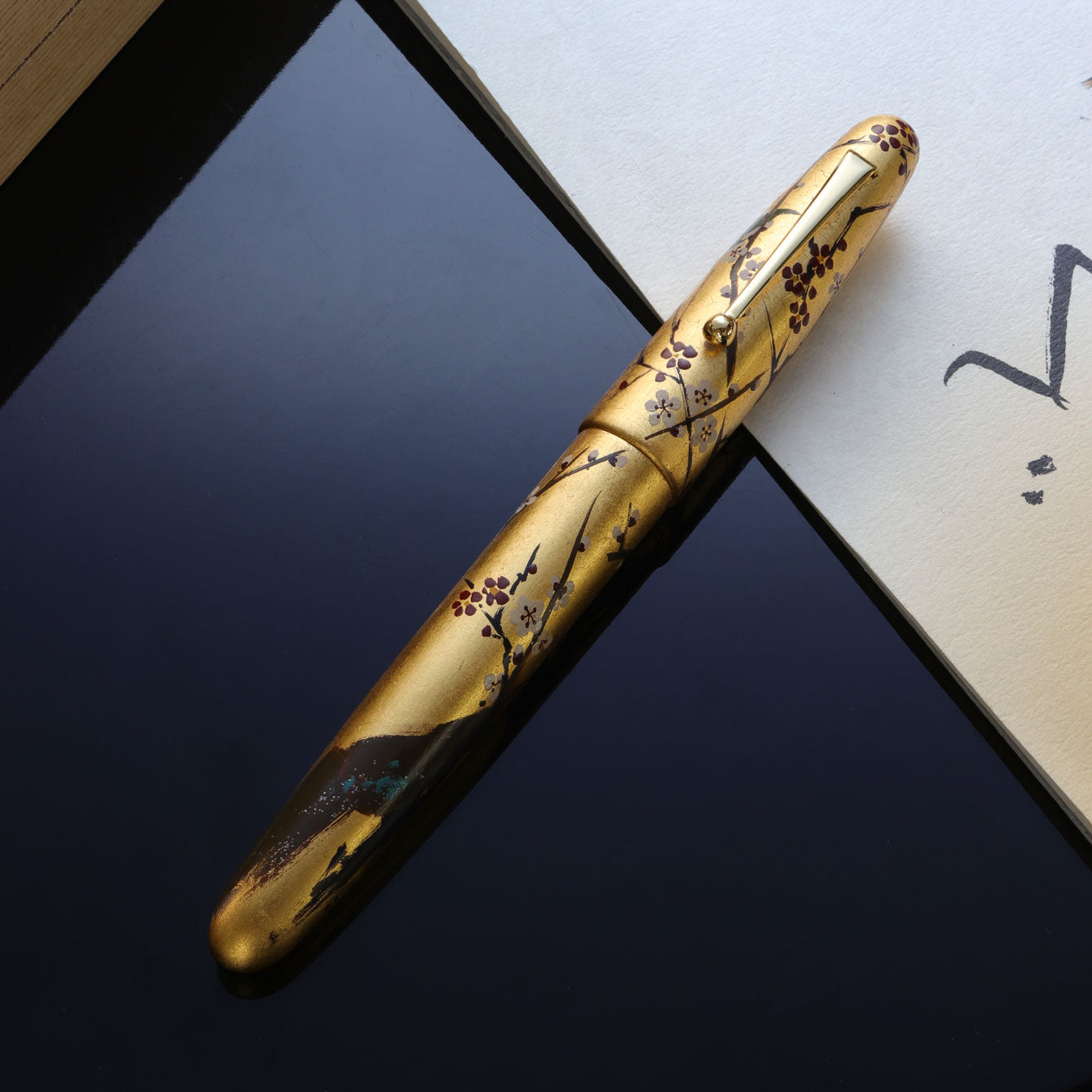
Hirota Byobu-e - Ume ni Hanasui (Plum Blossom)
Hirota Byobu-e - Ume ni Hanasui (Plum Blossom)
Couldn't load pickup availability
Description
Description
Each design in the Hirota Byobu-e Editor’s Collection is created as a singular piece — only one pen exists for each design.
About the collection
This collector's edition honors Japan's gentle ever-changing season; when Spring renewal is captured with the blossoms, when Summer breeze soothes during the dawn, and when the resilient Camellia gracefully survives winter.
First release will be at the end of March, followed by second release at the end of October.
The pen's surface is wrapped in 24K gold leaf and hand-drawn using pigmented Urushi.
Each pen comes with a Shogun 18K nib.

Pen Design: Ume ni Hanasui 梅に花吸
Inspired by the resilience of plum blossoms, which bloom at the threshold of spring, this is the moment of quiet vitality as when life returns subtly, carried in the faint fragrance of blossoms.
The piece of history retold
These masterpieces made complete by the artistry of Hirota Yoko. Her brush strokes on Byobu-e, was the one of the few artwork that cannot be replicated. Every details on the pen was intentional and drawn freehandedly, just as how Byobu-e painters in the past utilizes their highly developed brush techniques.
Byobu-e is the painting on Japanese folding screens (byōbu). These screens originally served as functional room dividers and windbreaks (the name literally means "protection from wind"), but they eventually became some of the most stunning canvases in Japanese art history. During Momoyama period (1573-1603), Urushi artisans paints freehandedly by relying on several brush technique to produce skillful details on large scale screen painting.
Historical Background
The tradition began when screens were imported from China during the Nara period (8th century). By the Momoyama and Edo periods, they evolved into massive, gold-leafed masterpieces used to decorate the castles of shoguns and samurai. Famous schools like the Kano and Rimpa schools are well-known for their iconic Byobu-e designs featuring nature, seasons, and literature.
About Master Hirota Yoko
With a great interest in traditional handmade crafts since elementary school, Master Hirota decided to choose this path and developed a strong passion for Japanese Urushi-making traditions. Master Hirota now has more than 30 years of hands-on experience in making Urushi and Maki-e.
Learn more about the artisan.

Specifications
Material & art: Ebonite, Urushi, 24K Gold leaf, Maki-e
Filling mechanism: Converter or Cartridge (European International Standard)
Nib: Shogun 18K
Feed: Plastic
Compact air-tight cap: Preven dried-out ink problem

Size & Shape

Packaging
Traditional Japanese Wooden Box + Cartridge & Converter + Instructional Materials, Certificate of Authenticity
Duties & Taxes
Duties & Taxes
For international orders, customers are responsible for any sales tax, duties, brokerage fees, and / or other taxes imposed by the government of the destination country, in addition to the quoted or invoiced price.
Learn about Wancher's terms of service for our premium fountain pens and writing instruments. Find important information on purchases, warranties, and customer rights. Essential reading for all Wancher pen enthusiasts and collectors.